
Blog Categories
AI Need Not Apply: Rebuttal to blog: Humans Need Not Apply
Before you read this rebuttal blog, you need to (or I suggest you should) read the original: Humans Need Not Apply.
The funny thing is, I wrote both the original — “Humans Need Not Apply” — and this one, “AI Need Not Apply,” and I agree with both!
To recap: the original blog outlined and detailed how AI is, and will continue to, clone the way creatives create. I used songwriting and music recording as the foundation of my argument. I stand by every point I made there, but my conclusion was that AI is now capable of writing and producing high-quality music across almost every genre.
Here’s what I didn’t include — and what many of us miss, especially what the AI bots themselves miss.
Humans have an instinctive ability to be inspired by the world around and within them. They create from the sum of their life’s experiences. Those experiences weave their way into the human psyche, affecting moods, momentary outlook, and — most importantly — emotional expression, thereby shaping creativity.
That last part, “emotional expression,” is the key component where AI cannot compete. At least not currently. (AGI, Artificial General Intelligence, is projected to be able to feel and emote)
AI’s basis for “creating” is to search enormous databases for patterns derived from constantly evolving algorithms as it discovers and compiles new algorithms. That’s the simplified version of AI learning: it mimics our “thinking” or processing and calls it “creating.”
Yes, if you ask AI to “create something new based on something old,” it does an incredible job of regurgitating something “New.” This “New” thing is built entirely from algorithms it has created, and the patterns it finds in the data at its disposal. This data is enormous, beyond what any human could gather and evaluate in a single lifetime.
But it is dead in the water without an existing data bank. Even though AI has access to virtually all the data stored in the digital domain — “internet and all our communications” — it is still limited when looking beyond it.
So, where am I going with all this mumbo jumbo?
I’m setting up how to distinguish between human creativity and AI “creativity.” As I said, human creativity is based on the sum total of a person’s life experiences — experiences that weave their way into the human psyche, affecting moods, momentary outlook, and, most importantly, emotional expression.
The way AI approaches it, by contrast, is to analyze and dissect the components of an existing human creation, then regurgitate them into a finished “new” creative product.
My sudden revelation came while I attended a holiday concert just a few days after blogging about how AI has already replaced the need for human contribution in the creative world, using music as my prime example.
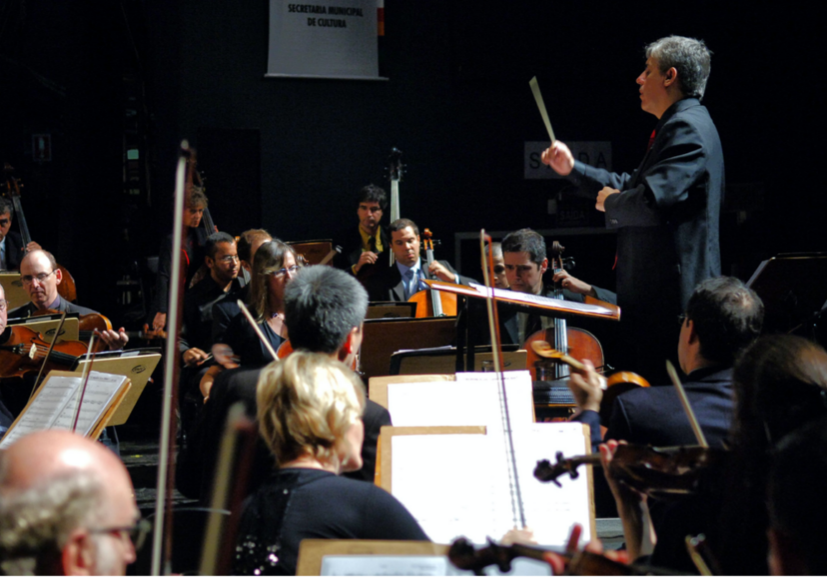
This performance featured a sixty-person vocal choir, a five-piece horn section, and a magnificent church pipe organ — all in a 100-year-old stone cathedral-type church.
While watching and listening to the performance, I had an “aha” moment. The music these musicians were performing was written hundreds of years ago. Every note, every lyric, all the arrangement details were now stored in a database somewhere (I know this because many performers were following their parts on iPads).
And yes, if AI had access to a digitized recording, it could do a good job of regurgitating it. That wasn’t the “aha” moment.
The moment came while I watched the musicians’ faces and body movements throughout the performance. I found myself studying the different physical sizes of each singer and musician, their ages, and their genders. How each singer held the choral book — was it close to their mouth, held with arms stretched out, or pulled tight to their body? Were they being influenced by the people next to, behind, or in front of them? How were they articulating the words and phrases with their mouths and lungs? Was the region of geographic origin affecting nuanced phrasing?
Then I went deeper: how had their personal life experiences woven their way into their psyches, and how might that affect their individual performances? Were the lyrics causing them to reflect on memories, pushing them to emote on each note or phrase? Maybe some were celebrating a joyful time in their lives, while others were experiencing sadness.
All these subtleties combine, moment by moment, note by note, to alter the performance heard and felt by the audience. Countless other variables were at play, too: the building’s construction, the night’s air (yes, air makes a difference in how sound travels), and the list of contributing factors could go on and on.
There is no way this many spontaneous, living variations in the creation and delivery of music could ever be regurgitated equally by AI.
Humans still remain the masters of creativity!
AI NEED NOT APPLY
1 Comment
Leave a Comment
You must be logged in to post a comment.

[…] MAKE SURE YOU READ THE COUNTER BLOG TO THIS ONE. AI Need Not Apply: Rebuttal to Humans Need Not Apply […]