
Blog Categories
Humans Need Not Apply
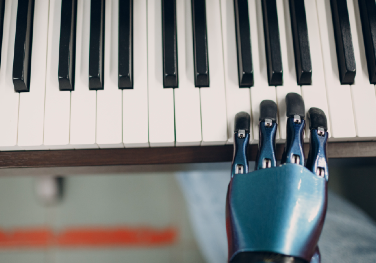
Here is just what the world doesn’t need: another person pontificating on the future of AI and its place in our world. But I’m going to do it anyway, keeping in mind that my world is the entertainment production industry.
As you know, over the years, I have always been one of the voices who have professed, “don’t fear new tech, embrace it, and you’ll inevitably find yourself in the front of the pack as the calendar pages keep turning.”
The more I learn and ponder “our” future and the power of this new tech, AI, the less sure I am that my philosophy remains a valid statement.
Let’s take a trip back a few decades to the not-so-distant past, about four decades ago. Maybe four decades seems like more than the “not-so-distant past”, but that’s basically because I’m as old as dirt and actively worked through them all, one way or another.
Let’s start my observation in the industry I began my career in: Music.
In the late seventies, the world of music creation and capture was dominated by analog technology: solid-state and tube sound amplifiers, tape recording machines, and mixing boards with lots of knobs and faders. Most gear consisted of transistors and passive components wired to circuit boards (look up circuit boards if you don’t know what I mean) and shoved into widgets, boxes, and production gear.
Then came Integrated circuits or ICs, as they were known. These were circuit boards manufactured into small IC “chips”. Each one was designed and manufactured to perform a particular function within a specific piece of gear.
Then, some smartypants engineer figured out how to combine an IC circuit into a larger “chip” and add a limited computer circuit to that IC, which could execute a list of “programmable functions” designated by the user. This new “tech” was tagged “digital technology” as opposed to traditional analog tech. Back then, my world was limited to the music industry, so it was a musician or studio engineer who would specify the function of the digital device they would be using.
Now, even though we used the word “computer” (which was basically the cutting-edge technology of the day), it was just a device that offered the user more extensive options than the previous “limited preset functions”. It was like an artist who had only access to six colors, then was given a hundred. Any artist whose vision and talents embraced this new palette of colors would begin creating amazing new paintings. The artist who couldn’t imagine beyond the original six was left behind.
The same was true for the musicians and studio engineers. For that matter, for anyone contributing to the music industry at any level, live stage lighting, sound reinforcement, recording studios, instrument manufacturers, and especially digital instrument manufacturers, if you embraced the new tech, your creative ability expanded, launching you to the head of the creative “in-demand pack”.
Like the artist who ignored the new colors, musicians who ignored or feared the new technological change in the music industry were left behind. Now I know many of you are screaming at this page, shouting, “bullshit! Many artists did succeed in not embracing the change.” On the surface, you might be right, but I bet if you dig deep, you will find some radical new digital technology somewhere in the creation of music or performance of their music…. I guarantee it!!
All of that provides a general overview of the evolution of tech in the music industry. But the same is true in broadcast, film, live events, theater, etc. In general, our lives have been heavily influenced by digital technology. From manufacturing to healthcare. From retail shopping to the tech embedded in our automobiles. You can’t avoid it, and for years, I have been a champion of embracing and enhancing my life and world through technological advancements.
Here comes the BIG BUT… AI is a new breed of tech. Unlike the tech that came before, the tech that was programmed and taught to execute specific tasks based on a user’s selections. AI is a real thinking device capable of communicating with you, understanding what you need, and then using ALL the digital information loaded onto the internet, from everyone’s UBER order to this blog, to the cancer research database at John Hopkins, it can then, in an instant, literally, will strategize an answer. Notice I didn’t say retrieve. Remember, the more we interact, the more it learns how WE think. The more it learns, the more it thinks or strategizes on its own.
Let’s go back to a simple example in the world of music capture. “Noise reduction”, unwanted noise can enter the recording process in a ton of ways. In the early days of recording, noise was just part of the content. Music on early vinyl was noisy. It was a byproduct of the capture process and playback hardware. So, worrying about removing noise at the capture point wasn’t a big deal. As the playback gear improved, the concern about removing it became more important. That led to an entire army of manufacturers building analog devices that allowed an engineer to “EQ” out noise notches in the recording without sacrificing the quality of the musical recording.
Using early Machine Learning AI, manufacturers trained an AI-based noise-reduction device to recognize, detect, and remove noise. That is a positive, non-threatening use of AI. No more hours of engineers poking around with an EQ to remove noise.
Just plug the AI into the signal path, and the noise is gone.
Staying in the music creation/recording industry. The next step is Intuitive AI. This is a major game-changer. It has the potential to completely remake the music creation process. (for that matter, all human development processes)
As I previously stated, AI has instantaneous access to the entire world’s internet database and beyond. What that means for music creation and recording is that every song ever available on the internet (every streaming service, every personal posting, any music share, peer-to-peer, any uploaded or downloaded song) is fair game for AI. AI is not only tracking the song as a finished product but also analyzing the entire anatomy of the song, each note, tempo, tempo changes, key signature, and key changes, each instrument, the FX on each track, the BPM (beats per minute), the audio mix of all tracks, etc., etc. Everything that contributed to the creation and recording of that song is categorized, and each part is available on demand to AI.
Who cares? You say.
Well, if some schmo record label executive, who knows nothing about music or producing, asks AI to create a smooth R&B track about losing a lover, with a horn section, a female backing track, and a funky bass line. AI, which has access to every R&B song ever written and recorded, is not going to steal an existing song. It is going to search its ever-growing database of billions of songs and look for patterns that writers, performers, and producers use to create that type of song.
In a few minutes, it will pump out a killer song that is at least as good as most commercial songs of that type.
Let’s say our schmo exec happened to get a call from Nashville while his AI was creating his R&B song. The Nashville connection asks if he has a classic R&B song, but with a country flavor. Schmo says yes and adds to his original prompt … “with a country flavor”.
Minutes later, Schmo sends the new AI track to Nashville, while Nashville sends Schmo a record deal.
This is who cares!!! Every creative who would typically have been in that development process would have been paid for their contribution.
Remember, I’ve just been using music as an example. Every step in every process could and probably will be usurped if the end product has been digitized; it’s all fair game for AI.
Sport broadcasts can be produced using robotic motion-tracking cameras that can ID player numbers, automated camera switchers, and computerized graphics. AI will analyze millions of games and learn the process of covering sports.
Live events, concerts, or theaters. AI will study the world’s show databases (remember, YouTube and every streaming platform are databases for AI) and then control the robo lights, sound mixing, and video playback boards. If AI has access to data, it can reproduce the process.
As I said when I started writing this, I’ve long championed staying on top of and mastering new tech. If you master new tech, it will move you to the front of the employability line. The problem with AI and its ability to upgrade its own code to improve its functionality is that there will be no line to get in front of.
Humans need not apply.
Footnote: As of this writing, most creative commercial industries prohibit the use of AI to create and produce products. BUT money tends to make people look the other way.
Remember Grammy winner Milli Vanilli !!!!
MAKE SURE YOU READ THE COUNTER BLOG TO THIS ONE. AI Need Not Apply: Rebuttal to Humans Need Not Apply
1 Comment
Leave a Comment
You must be logged in to post a comment.

[…] Before you read this rebuttal blog, you need to (or I suggest you should) read the original: Humans Need Not Apply. […]